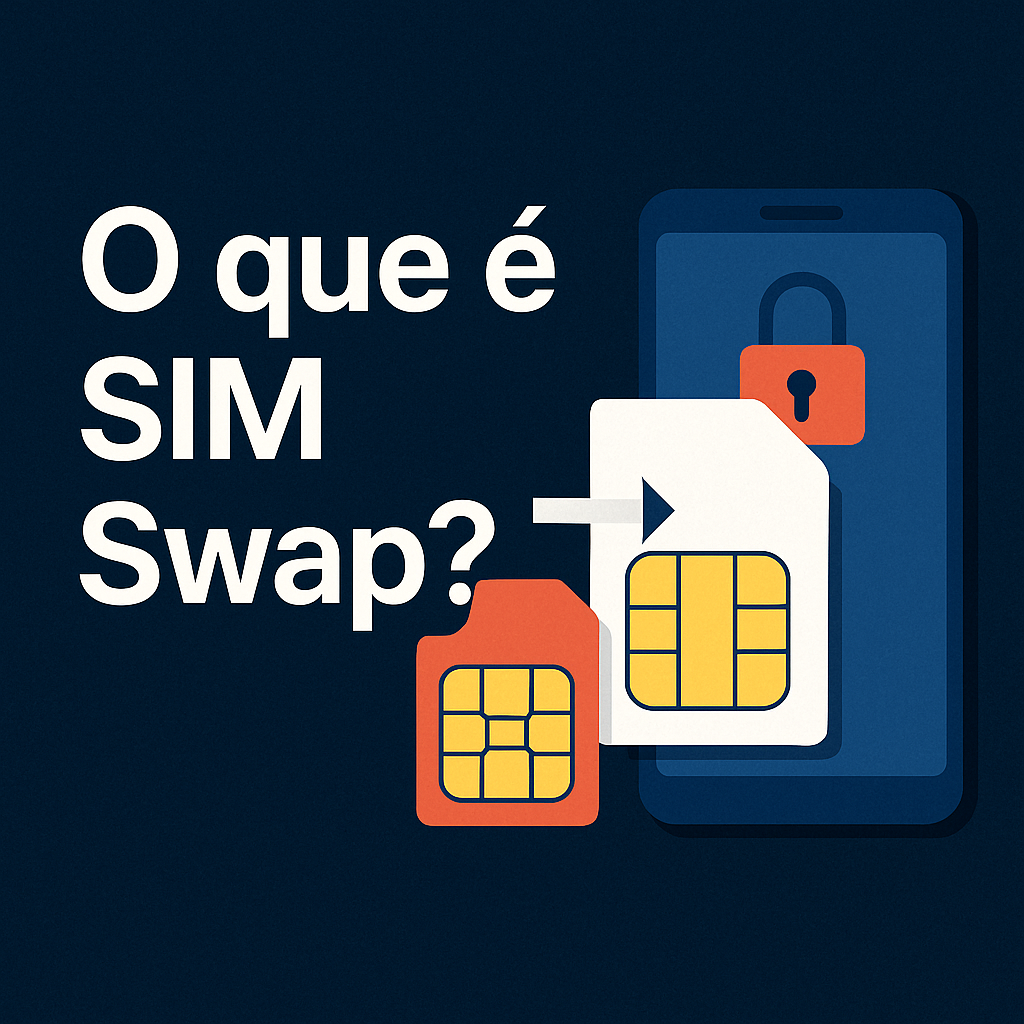
What is SIM Swap? Understanding the Attack That Can Compromise Your Digital Security
Have you heard of SIM Swap? This silent attack has been growing for years and has already caused millions in damages in Brazil and around the world. It is one of the most effective methods for stealing digital identities, accessing bank accounts, hijacking emails, and taking over social media profiles.
At Dharma Tecnologia, we closely monitor the most common attack vectors used by fraudsters. SIM Swap is one of them — and it deserves special attention. In this article, we explain how the attack works, who is most at risk, how to protect yourself, and what companies can do to shield their users.
How Does a SIM Swap Attack Work?
The term SIM Swap comes from Subscriber Identity Module Swap — in simple terms, the attacker manages to transfer the victim’s phone number to a new SIM card in their possession. From that point, the attack begins in earnest.
Typical attack steps:
- Data collection — the fraudster gathers the victim’s personal information: full name, national ID, date of birth, address, mother’s name, etc. This data often comes from data breaches or social engineering.
- Contacting the carrier — using that data, the attacker contacts the mobile carrier pretending to be the victim, claiming a lost phone and requesting a SIM replacement.
- Fraudulent SIM activation — if the carrier lacks strict verification processes, the number gets transferred to the new SIM.
- Account takeover — with the victim’s number, the attacker receives SMS messages and two-factor authentication (2FA) codes for banks, email, social media, messaging apps, and more.
- Damage — the attacker moves funds, resets passwords, hijacks profiles, and may even extort the victim.
Who Is Most at Risk?
- People with high financial activity
- Professionals in technology, investments, or cryptocurrencies
- Business owners or e-commerce operators
- Influencers and accounts with large followings
- Anyone using SMS-based 2FA (which is still surprisingly common)
Why Is SIM Swap So Dangerous?
Because it breaks the trust placed in SMS-based 2FA, which many companies still rely on as a security layer. Once the attacker controls the victim’s number, they don’t need the password — they simply reset everything by receiving the code on their own phone.
How to Protect Yourself
For individuals:
- Never use SMS as your only authentication factor. Prefer apps like Authy, Google Authenticator, or hardware keys (YubiKey, Feitian, etc.)
- Set a SIM PIN and carrier account password.
- Configure number portability passwords where available.
- Be suspicious of calls or messages requesting personal data.
- Use separate email addresses for critical services.
For companies:
- Don’t rely on SMS-based 2FA. Consider more secure alternatives.
- Implement anomalous behavior detection — simultaneous logins from distant locations, sequential email and password changes, etc.
- Offer app-based or hardware key authentication.
- Educate your users. Many still don’t know this type of attack exists.
What to Do If You’re a Victim
- Contact your carrier immediately and request the line to be blocked.
- File a police report online.
- Notify your banks and apps to freeze transactions.
- Reset all passwords and switch 2FA to an authenticator app or hardware key.
Dharma Tecnologia’s Role
At Dharma, we take digital fraud prevention seriously. We build our own solutions to detect suspicious behavior, validate communications, and identify attack indicators — including SIM Swap vectors.
Our goal is to protect data, reputations, and digital assets.
If your company still uses SMS as a 2FA method, or you want to understand how to reduce your social engineering risk, get in touch.
Dharma Tecnologia — Digital security, straight to the point.
[email protected] | dharmat.com.br